


Ever stood there staring at your freshly taped drywall and thought, Okay, but now what grit to sand drywall with? You’re not alone. Most people get frustrated at this step because choosing the wrong sandpaper can leave scratches, uneven patches, or way too much dust floating around your house. It’s one of those small details that make a big difference in the final look of your walls.
That’s exactly what this blog will clear up for you. We’ll break down the best grit options, explain why they matter, and share simple tips to make sanding faster, smoother, and less messy. By the end, you’ll know exactly which grit to pick and how to use it for a flawless, paint-ready finish.
What Are Sanding Grits?
Sanding grits are numbers printed on sandpaper that tell you how rough or smooth the paper feels. Lower numbers mean coarser sandpaper, which removes more material quickly. Higher numbers mean finer sandpaper, which smooths the surface without leaving deep scratches.
For drywall, grit choice matters a lot. Too coarse, and you’ll gouge the joint compound. Too fine, and you’ll spend forever sanding without noticeable progress. The trick is knowing when to use each grit and how to combine them in a sequence for the best results.
Read More Article:What Grit to Sand Drywall
Different Sanding Grits Explained
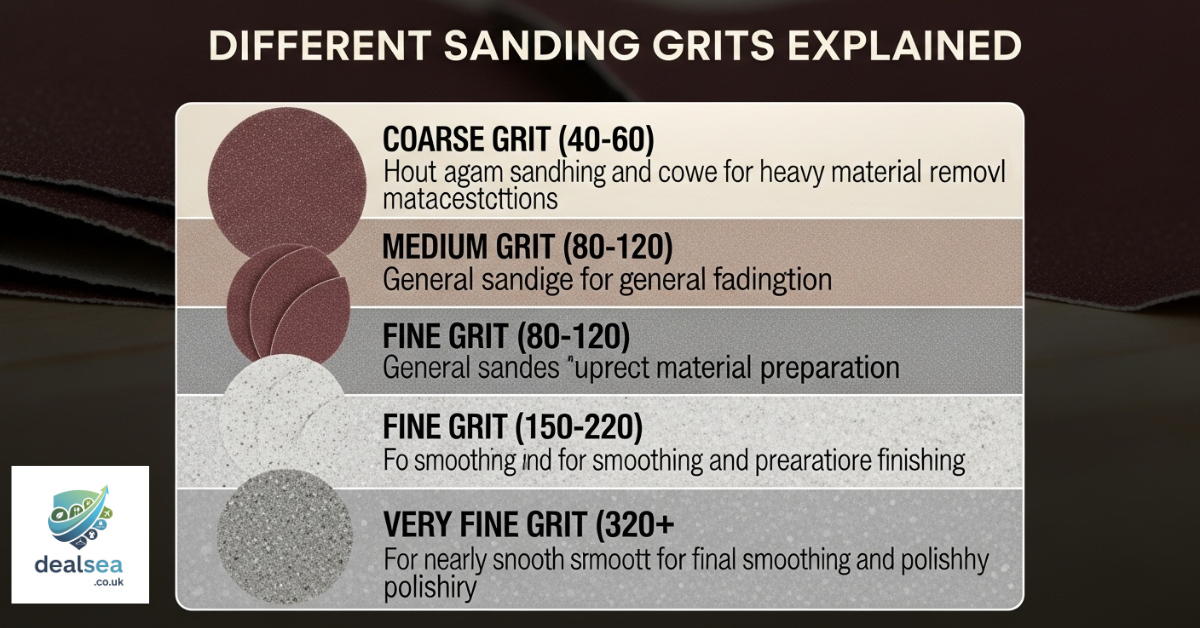
Coarse Grits (40 60)
Coarse grits like 40 or 60 aren’t usually recommended for drywall. They’re aggressive and meant for heavy removal tasks, such as stripping wood or shaping plaster. Using them on drywall will likely leave deep scratches and ruin the finish.
The only time you might reach for coarse grit is if you need to remove stubborn ridges of joint compound quickly. Even then, switch to finer sandpaper right after to correct the surface.
Medium Grits (80 120)
Medium grits are your starting point for most drywall sanding. An 80–100 grit is often used to level uneven patches of dried compound. Then, moving up to 120 grit gives you a smoother surface without over-sanding.
This range is perfect for sanding seams and joints where you’ve applied tape and joint compound. It balances material removal with control, making it one of the most versatile choices in the drywall process.
Fine Grits (150 180)
Fine grits are considered the sweet spot for drywall finishing. A 150-grit sandpaper is commonly used before priming because it smooths the wall while still leaving enough texture for the primer to adhere.
If you want a nearly polished look, move up to 180 grit. It’s excellent for the last sanding pass, ensuring a flawless finish that looks seamless once painted.
Very Fine Grits (220 240)
Very fine grits are sometimes used for final touch-ups. A 220-grit paper, for example, is great for lightly sanding over primer to knock down any raised fibers or imperfections.
However, you don’t want to overdo it with very fine grits on bare drywall compound. It can polish the surface too much, preventing paint or primer from bonding properly. Use it sparingly for small refinements.
Extra Fine Grits (320 and above)
Sandpapers above 320 grit are rarely needed for drywall. They’re mostly used in woodworking or automotive finishing, where ultra-smooth surfaces are required. For drywall, going this fine is unnecessary and often counterproductive.
Stick to 150 220 grit for the majority of your drywall work. Anything above that falls into the overkill category for home renovation.
Best Sanding Grit for Drywall
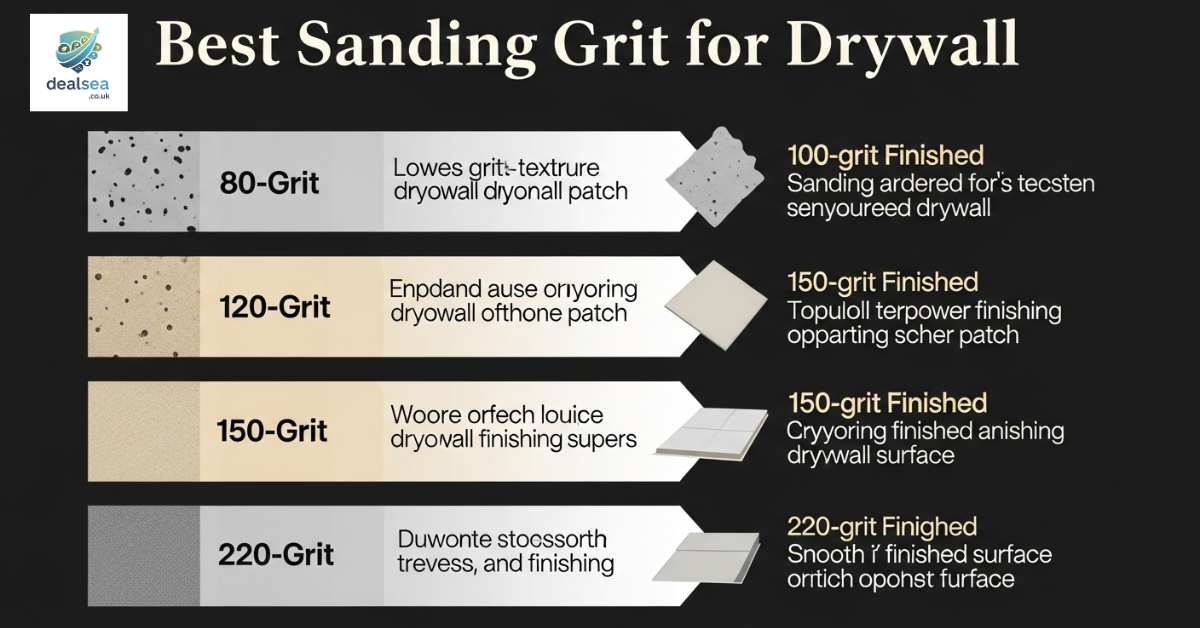
So, what’s the best sanding grit for drywall overall? The go-to answer is 150-grit. It’s rough enough to smooth the compound but fine enough to avoid scratches.
In practice, most professionals start with 120 grit to knock down imperfections, then finish with 150 180 grit before priming. This two-step process ensures a smooth surface that holds primer and paint beautifully.
Types of Sanding Tools for Drywall
Choosing the right tool is just as important as picking the right grit. Let’s break down your options.
Sanding Sheets
Sanding sheets are versatile and affordable. They come in different grit numbers and can be wrapped around a block or a hand sander. Sheets are great for flat surfaces and small repairs.
Sanding Discs
Sanding discs are designed for power sanders. They’re efficient for large areas, especially ceilings and wide walls. Pair them with a vacuum attachment or dust extraction system to reduce mess.
Sanding Sponges
Sanding sponges are flexible and perfect for corners, edges, and tight spaces. They can be used dry or wet, with wet sanding being less dusty. A medium or fine sponge is ideal for detail work around seams.
Hand Sanders
Hand sanders, like a block sander or pole sander, give you manual control. They’re useful for maintaining even pressure across seams and reaching high walls. A pole sander saves you from climbing a ladder repeatedly.
Conclusion
Sanding drywall doesn’t have to be a guessing game. Once you understand grit numbers and their uses, you’ll know exactly how to handle seams, joints, and final finishes.
For most projects, starting with 120 grit and finishing with what grit to sand drywall (150–180) will give you the best results. Combine that with the right tools, dust management, and light pressure, and you’ll end up with walls so smooth they’re ready for primer and paint.
Smooth walls, clean finish, and no regrets, that’s the goal. Now, grab your sandpaper and get the job done right.
FAQs
What grit should I sand drywall with?
For drywall, 120 to 150 grit sandpaper is ideal. It smooths the surface without damaging the joint compound.
Which is rougher, 40 or 60 grit?
40 grit is rougher than 60 grit. The lower the number, the coarser the sandpaper.
Is 150-grit sandpaper good for drywall?
Yes, 150-grit is perfect for drywall finishing. It gives a smooth surface ready for priming and painting.
What is 400-grit sandpaper used for?
400 grit is very fine sandpaper, mostly used for polishing, automotive finishes, or smoothing metal and wood—not drywall.