

It’s confusing enough to deal with immigration paperwork, but when you hear terms like VAWA and U Visa, the stress can feel even heavier. Many people in tough situations wonder what is different between a VAWA case and U1, and not knowing the answer can leave you scared about making the wrong move. If you’re already facing hardship, the last thing you want is to encounter more delays or denials.
That’s why this blog is here to clear things up for you. We’ll explain the main differences between a VAWA case and a U1 visa, who qualifies for each, and how they can impact your future. By the end, you’ll have a clear understanding of both options so you can take the next step with confidence and less confusion
Famil
Impact of Family Ties
Family plays a central role in both VAWA and U1 cases, but in very different ways. Under VAWA, an abused spouse, child, or parent of a U.S. citizen or lawful permanent resident can self-petition without relying on the abuser. This means family relationships define eligibility.
For U1 visas, family still matters, but in a secondary way. The main applicant must be a victim of a qualifying crime and cooperate with law enforcement, and only then can certain family members apply as derivatives.
Read MORE Article:What Is Different Between the VAWA Case and the U1?
Adoption Considerations
Adoption can complicate family-based petitions. For VAWA, an adopted child may qualify if the legal relationship meets U.S. immigration definitions. In contrast, adoption is not directly relevant to U1 cases unless the adopted person is included as a derivative beneficiary.
Military
Military families sometimes face unique challenges in immigration cases. VAWA petitions from spouses of U.S. military members may have additional support options, since military service often brings public benefits and protections.
For U1 cases, military status doesn’t change eligibility but may impact how quickly law enforcement cooperates or provides certification. Advocates often encourage military families to explore both humanitarian and family-based immigration avenues.
Humanitarian Grounds
Both programs fall under humanitarian relief, but with different purposes. VAWA was designed to protect victims of domestic violence, extreme cruelty, and abuse within family relationships. It allows survivors to seek lawful status independently, breaking free from abusers.
The U1 visa, on the other hand, was created for victims of certain crimes, not limited to family abuse such as sexual assault, trafficking, or violent attacks. Its focus is on helping law enforcement investigate and prosecute crimes while protecting immigrant victims.
Visit the U.S.
Neither VAWA nor U1 is meant for short visits or tourism. However, people often confuse humanitarian relief with temporary visas. VAWA is not a visa at all; it is a self-petition leading to lawful permanent residency.
The U1 visa does grant temporary non-immigrant status for up to four years, with the possibility of applying for a green card later. That’s one of the biggest distinctions: VAWA leads directly to green card eligibility, while U1 requires a wait period before adjustment of status.
Working in the United States
Both options eventually provide work authorization, but the process differs. With VAWA, once the self-petition is approved and an adjustment of status is filed, applicants can receive an Employment Authorization Document (EAD).
For U1 applicants, work permits become available after the petition is approved, though the backlog often creates long waiting times. Despite delays, U1 holders and their family members eventually gain the right to work legally.
Avoid Scams
Sadly, scammers often take advantage of vulnerable immigrants by promising quick approvals. VAWA and U1 cases are complex and must go through USCIS with strict evidence requirements. If someone offers guaranteed approvals or shortcuts, that’s a red flag.
Always verify with a licensed immigration attorney or a trusted nonprofit. Avoiding scams is as important as filing correctly, since errors can cause years of delay or denial.
Careers at USCIS
Understanding how USCIS processes applications can help set realistic expectations. Officers are trained to review evidence carefully in both VAWA and U1 petitions, and the agency regularly updates its policies. While you can’t control processing times, knowing USCIS’s role helps reduce stress.
For many applicants, legal representation means having someone who understands USCIS procedures and communicates directly with the agency. That’s often the difference between a smooth process and repeated setbacks.
Forms
Most Accessed Forms
- VAWA: Form I-360 (Application for Amerasian, Widow(er), or Special Immigrant)
- U1 Visa: Form I-918 (Petition for U Nonimmigrant Status) and Form I-192 (waiver for inadmissibility if needed)
Family-Based Forms
VAWA cases may include children or parents directly. For U1, derivatives are added through Form I-918 Supplement A.
File Online & Digital Access
Some USCIS forms can be filed online, though VAWA petitions are generally mailed for confidentiality. U1 petitions also require sensitive supporting documents, usually filed on paper.
Employment & Humanitarian Forms
Employment authorization is tied to adjustment of status for VAWA and to approved U1 status for visa holders. Other humanitarian options, like the T visa, sometimes overlap but serve different populations.
Newsroom & Policy Updates
Policy changes affect both programs. For example, the U1 visa has a 10,000 annual cap, leading to long waitlists. VAWA petitions do not have such a cap but face normal processing delays.
Congressional hearings, USCIS announcements, and advocacy campaigns often shape how quickly cases move. Staying updated helps applicants manage expectations.
Citizenship & Long-Term Pathways
Both VAWA and U1 can eventually lead to U.S. citizenship, but the timelines differ. VAWA beneficiaries apply for adjustment of status sooner, usually after Form I-360 approval.
U1 visa holders must wait at least three years after receiving U status before applying for a green card, and then fulfill additional residency requirements before naturalization.
Green Card Process
VAWA Green Card
- File Form I-360
- Apply for adjustment of status with Form I-485
- Obtain a work permit and an eventual green card
U1 Green Card
- Get a U visa approval
- Wait three years in U1 status
- Apply for an adjustment with Form I-485
- Then proceed toward residency and later citizenship
Laws & Regulations
VAWA was enacted under the Violence Against Women Act, focusing on protection from family-based abuse. The U1 visa was created under the Victims of Trafficking and Violence Protection Act (2000).
Both have strict confidentiality rules, but their evidence requirements differ:
- VAWA requires proof of a qualifying relationship and abuse.
- U1 requires law enforcement certification of helpfulness.
Tools & Resources
Applicants benefit from resources like:
- USCIS policy manuals
- Legal aid organizations
- Victim assistance programs
- Self-help checklists and guides
These tools ensure victims are not navigating the system alone.
Key Comparison of VAWA vs U1 Visa
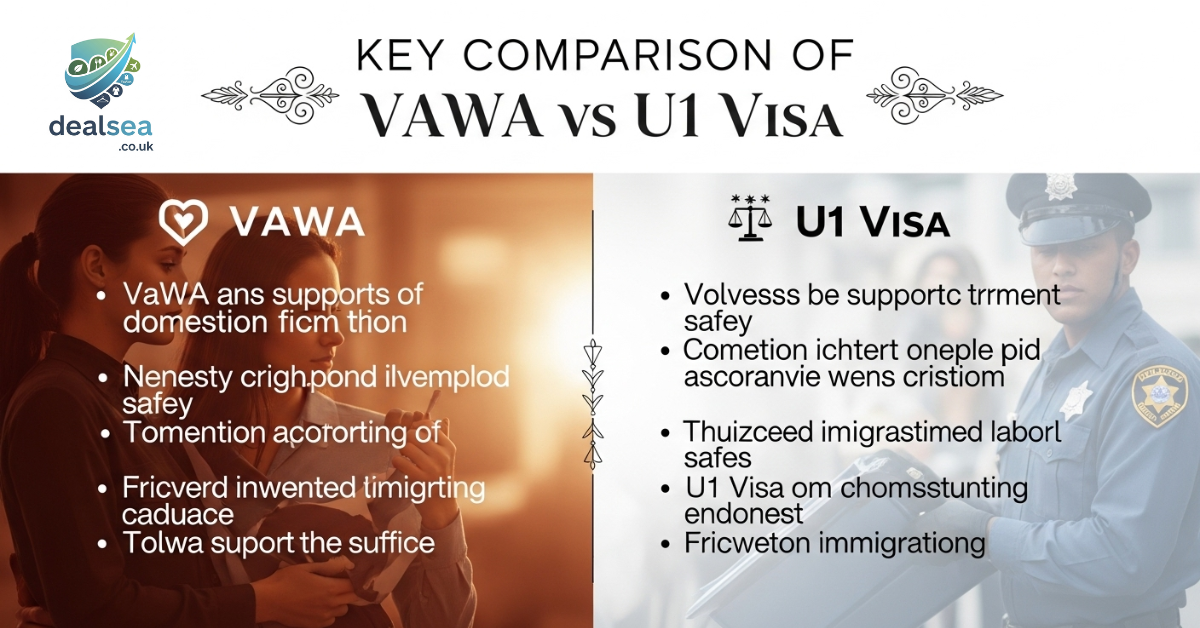
| Feature | VAWA | U1 Visa |
| Purpose | Protects victims of domestic violence from family members | Protects victims of qualifying crimes who help law enforcement |
| Main Form | I-360 | I-918 + certification (I-918B) |
| Eligibility | Abused spouse, child, or parent of USC/LPR | Victim of certain crimes + cooperation with police |
| Work Authorization | After I-360 approval and I-485 filing | After U1 approval (backlog may delay) |
| Green Card Path | Directly after petition approval | Must wait 3 years in U1 status before applying |
| Annual Cap | None | 10,000 visas per year |
| Derivative Family | Children, parents (in some cases) | Spouse, children, parents (depending on age) |
This table highlights what is different between the VAWA case and U1 in the clearest way possible.
Why Legal Representation Matters
VAWA and U1 cases are both complex and emotionally heavy. Having a qualified immigration attorney ensures proper documentation, timely filing, and protection from mistakes.
Attorneys also help gather strong evidence, like police reports, affidavits, or therapy records. With professional help, applicants can focus on healing while their case is handled correctly.
Conclusion
Understanding what is different between a VAWA case and a U1 is not just about paperwork; it’s about knowing which path truly fits your situation. VAWA empowers survivors of family-based abuse to self-petition and move toward independence, while the U1 visa supports victims of crime who assist law enforcement.
Both options lead to lawful status, work authorization, and eventually permanent residency. If you’re unsure which applies to your life, don’t wait; seek trusted legal advice. Relief is available, and your future in the U.S. can be more secure than you think.
FAQS
What is the difference between VAWA and a U visa?
VAWA lets abused family members of U.S. citizens or residents self-petition for legal status, while the U visa is for crime victims who help law enforcement in investigations or prosecutions.
What is the U1 visa type?
The U1 visa is a non-immigrant visa for the principal victim of qualifying criminal activity, offering legal status and work authorization in the U.S.
What is the success rate of a U visa?
Approval rates for U visas are generally high, but because of the 10,000 annual cap, many applicants face long waiting lists before final approval.
What’s next after the VAWA case is approved?
Once a VAWA case is approved, the applicant can apply for adjustment of status (green card), receive work authorization, and access certain public benefits.