

That tight, uncomfortable, did I just gain five pounds in an hour feeling — how to reduce bloating fast is one of the most common questions people search for when that tight, uncomfortable, “did I just gain five pounds in an hour” feeling strikes. Bloating can happen after a big meal, during stressful weeks, or seemingly out of nowhere..The good news is that most cases of bloating are temporary and can be eased with a few simple, natural steps. This guide walks through exactly what causes bloating, the fastest ways to relieve it, what to eat (and avoid), and when it’s worth seeing a doctor.

What Is Bloating, Exactly?
Bloating is that swollen, tight feeling in the abdomen, usually caused by a build-up of gas or fluid in the digestive tract. It’s incredibly common — most people experience it at some point, and for many, it happens regularly. While it’s rarely dangerous on its own, bloating can be uncomfortable enough to affect daily life, clothing choices, and even mood.
What Causes Bloating in the First Place?
Before jumping into fixes, it helps to understand why bloating happens. Most commonly, it’s caused by one or more of the following:
- Swallowing air while eating too quickly, chewing gum, or talking while eating
- Trapped gas from certain foods, including beans, carbonated drinks, and cruciferous vegetables like broccoli and cabbage
- Overeating or consuming heavy, fatty meals that take longer to digest
- Constipation, which allows gas and stool to build up in the intestines
- Stress, which can slow down digestion and disrupt normal gut function
- Hormonal changes, particularly in the days leading up to a menstrual period
- Food intolerances, such as lactose or gluten sensitivity, in some individuals
Knowing the likely cause makes it much easier to figure out how to reduce bloating fast and choose the right remedy — not every bloating fix works equally well for every trigger. According to the NHS, most cases of bloating are linked to diet, swallowing air, or digestive conditions like IBS.
How to Reduce Bloating Fast: 15 Proven Ways
1. Go for a Short Walk
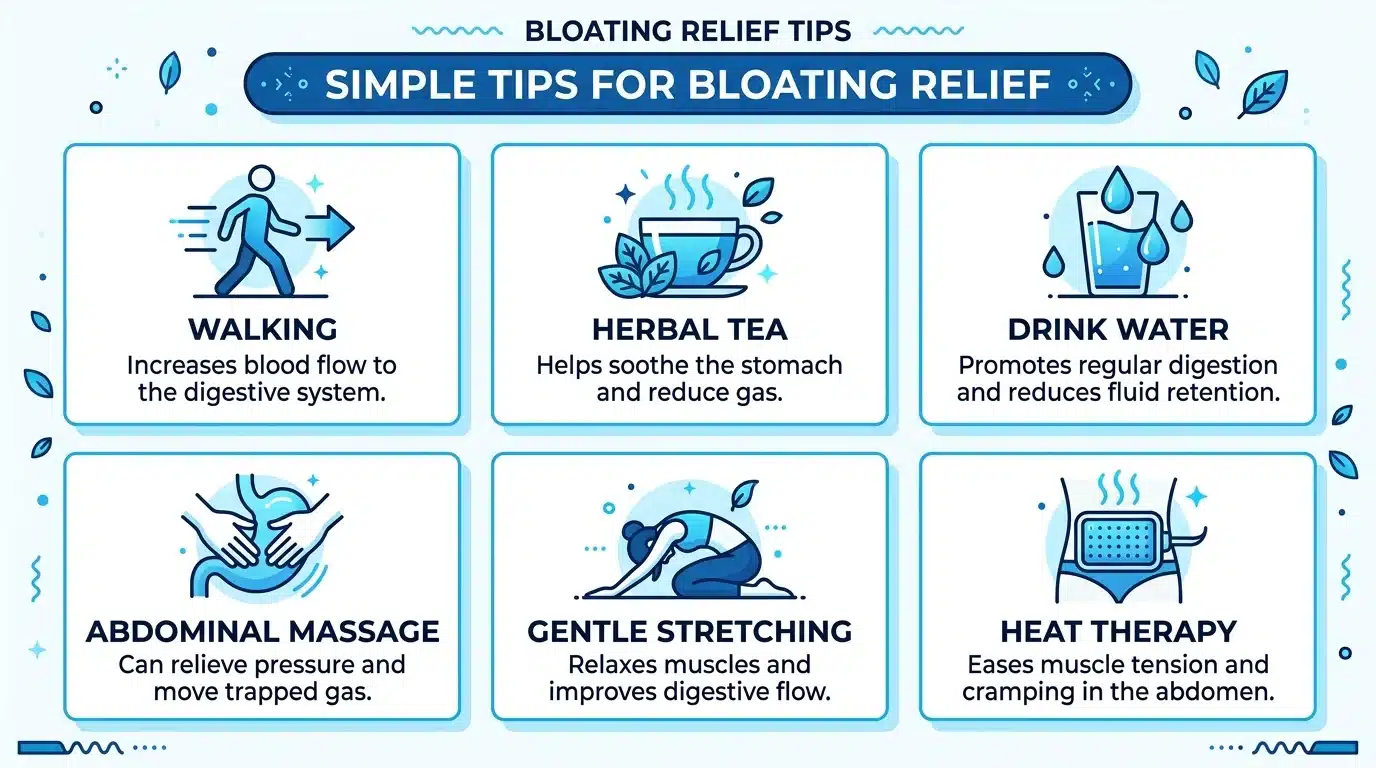
If you’re wondering how to reduce bloating fast, a short walk is often the first thing experts recommend. Light movement helps stimulate the digestive tract and can encourage trapped gas to move through the system faster. Even a 10-15 minute walk after eating can noticeably ease that heavy, full feeling. Walking is often considered one of the fastest and simplest remedies available.
2. Sip Warm Peppermint or Ginger Tea
Both peppermint and ginger have long been used to calm the digestive system. They’re believed to help relax the muscles in the gut, which may ease cramping and speed up the release of trapped gas. A warm cup after a heavy meal can be genuinely soothing.
3. Avoid Carbonated Drinks
Fizzy drinks introduce extra gas directly into the stomach, which is one of the fastest ways to make bloating worse. Swapping soda or sparkling water for still water during a bloating episode can make a real difference within a short amount of time.
4. Try Gentle Abdominal Massage
A slow, circular massage in a clockwise direction over the stomach can help move trapped gas along the digestive tract, following the natural direction of digestion. This is a simple technique that can be done anywhere, without any tools or products, and many people find it brings relief within minutes.
5. Cut Back on Salt Temporarily
Excess sodium causes the body to retain water, which can add to that puffy, bloated feeling — separate from gas-related bloating. Choosing low-sodium meals for a day or two can help the body release excess water naturally.

6. Eat Slowly and Chew Thoroughly
Eating too fast means swallowing more air, which contributes directly to bloating. Slowing down and chewing food thoroughly gives the digestive system a head start and reduces the amount of air taken in during meals — a small habit change that adds up over time.
7. Limit Gas-Producing Foods During Flare-Ups
Foods like beans, lentils, broccoli, cabbage, and onions are nutritious but can produce extra gas during digestion. This doesn’t mean cutting them out completely — just being mindful of portion sizes on days when bloating is already a problem.
8. Stay Consistently Hydrated
It might sound counterintuitive, but drinking enough water actually helps reduce bloating, especially when it’s related to constipation or excess sodium. Aim for steady water intake throughout the day rather than large amounts all at once, which can itself cause a temporary full feeling.
9. Consider a Short-Term Low-FODMAP Approach
For people who experience bloating often, certain fermentable carbohydrates (known as FODMAPs) found in foods like garlic, wheat, and certain fruits may be a trigger. A short trial of reducing these foods, ideally with guidance from a healthcare provider, can help identify specific personal triggers. The Mayo Clinic notes that identifying trigger foods is often the most effective long-term approach to reducing gas and bloating.
10. Apply Gentle Heat to the Abdomen
A warm compress or heating pad placed on the stomach can help relax tense abdominal muscles and ease cramping associated with trapped gas. This is a passive remedy that works well alongside movement or tea.
11. Try Light Stretching or Yoga Poses
Certain gentle stretches — such as knees-to-chest or a seated twist — can help release trapped gas by physically encouraging movement through the digestive tract. These poses are commonly recommended for quick relief and can be done at home in just a few minutes.

12. Eat Smaller, More Frequent Meals
Large meals ask more of the digestive system all at once, which can increase the likelihood of bloating. Spacing food intake into smaller portions throughout the day can ease the digestive load and reduce that overly full feeling.
13. Watch Out for Sugar Alcohols
Ingredients like sorbitol, xylitol, and mannitol — common in sugar-free gum and low-calorie snacks — are known to cause gas and bloating in many people, since they’re not fully absorbed by the digestive system. Checking ingredient labels can help identify hidden culprits.
14. Manage Stress Levels
Because the gut and nervous system are closely connected, chronic stress can genuinely slow digestion and worsen bloating. Simple stress-reduction habits like deep breathing, short walks, or a consistent sleep schedule can have a noticeable knock-on effect on digestive comfort.
15. Consider an Over-the-Counter Remedy for Fast Bloating Relief
For occasional, mild bloating, over-the-counter options like simethicone-based products can help break down gas bubbles in the digestive tract for quicker relief. These are generally considered safe for short-term, occasional use, though it’s worth checking with a pharmacist if used frequently.
Foods That May Help Reduce Bloating
Diet plays a big role in how to reduce bloating fast — certain foods can speed up relief while others slow it down. Certain foods are commonly associated with easing bloating, largely due to their water content, digestive enzymes, or anti-inflammatory properties:
- Cucumber high water content that may help reduce fluid retention
- Papaya contains natural digestive enzymes
- Bananas rich in potassium, which can help balance sodium levels
- Yogurt with live cultures may support healthy gut bacteria
- Fennel seeds traditionally used to ease gas and bloating after meals
Foods That May Make Bloating Worse
If you’re trying to figure out how to reduce bloating fast, it also helps to know which foods work against you. Some foods are more likely to contribute to bloating, particularly when eaten in large amounts:
- Carbonated beverages
- Beans and lentils (in large portions)
- Cruciferous vegetables like broccoli and cauliflower
- Fried or heavily processed foods
- Artificial sweeteners and sugar alcohols
This doesn’t mean these foods should be avoided entirely — many are genuinely healthy — but moderation matters, especially during a bloating flare-up.

When Should You See a Doctor About Bloating?
While this guide covers how to reduce bloating fast at home, occasional bloating is normal and usually harmless.
. However, it’s worth checking in with a doctor if bloating is:
- Persistent or happening most days for several weeks
- Accompanied by unexplained weight loss
- Paired with severe pain, vomiting, or blood in the stool
- Getting progressively worse over time despite dietary and lifestyle changes
These symptoms could point to an underlying digestive condition that needs proper diagnosis and treatment, rather than home remedies alone. The Cleveland Clinic recommends seeing a doctor if bloating is persistent, severe, or accompanied by other warning signs. Persistent digestive issues can sometimes point to something more — read our coverage of Bryan Johnson’s autoimmune gastritis diagnosis to understand how chronic digestive conditions are diagnosed.
Frequently Asked Questions
How to reduce bloating fast at home?
The fastest home remedies include a short walk, warm peppermint tea, gentle abdominal massage, and staying hydrated.
How can I reduce bloating in 5 minutes?
A brisk short walk, a cup of warm peppermint tea, and gentle abdominal massage are among the fastest ways to start easing bloating within a few minutes.
What can I drink to debloat?
Warm water, peppermint tea, ginger tea, and plain still water are commonly recommended. Carbonated drinks should generally be avoided during a bloating episode.
What are 5 signs of bloating?
Common signs include a visibly swollen or tight abdomen, a feeling of fullness, abdominal discomfort or cramping, excessive gas, and rumbling or gurgling sounds in the stomach.
How long does it take for a bloated belly to go down?
For most people, mild bloating eases within a few hours to a day, especially with movement, hydration, and dietary adjustments. Bloating tied to hormonal cycles may last a few days.
What is the fastest way to reduce bloating?
A short walk combined with warm peppermint or ginger tea is often one of the quickest ways to ease bloating, since both help move trapped gas through the digestive system.
Does drinking water help with bloating?
Yes — staying hydrated can help reduce bloating linked to constipation or excess sodium intake, even though it may feel counterintuitive when you’re already feeling full.
Final Thoughts
Now that you know how to reduce bloating fast, the key is consistency — small daily habits make the biggest difference. Bloating is uncomfortable but usually temporary, and most cases respond well to simple lifestyle adjustments like slowing down at meals, staying hydrated, and moving your body after eating.
Paying attention to personal food triggers over time can also make a big difference in how often bloating occurs. If it becomes a regular, disruptive part of your routine, it’s worth looking deeper into potential causes with a healthcare professional rather than relying on quick fixes alone.