


Is Healthy Eating on a Budget UK 2026 Actually Possible?
This guide covers everything about how to eat healthy on a budget in the UK in 2026
Here is a question millions of people across the UK are asking — can you really do healthy eating on a budget UK without spending a fortune?
The short answer is yes. And the evidence backs it up.
Healthy eating on a budget UK is not only possible — it is arguably more achievable today than at any point in the past decade. The biggest myth in nutrition is that healthy food is expensive. While premium organic produce and trendy superfoods can certainly be costly, the most nutritious foods available in any UK supermarket — eggs, oats, lentils, frozen vegetables, tinned fish — are consistently among the cheapest foods per serving.
In this complete guide, we break down exactly how to eat well on a tight budget in the UK and USA in 2026, using real data, practical meal planning strategies, and 10 proven tips that actually work.
Who Needs This Guide? — The 5 Ws and 1 H
Who: Anyone in the UK or USA looking to eat healthier without overspending — from students and young families to single professionals and pensioners on a fixed income.
What: A practical evidence-based guide on healthy eating on a budget UK — for anyone on a tight weekly food budget.
When: Right now — with UK food prices still elevated following years of inflation, budget eating strategies have never been more relevant.
Where: Focused on UK supermarkets, meal planning, and cooking strategies — with comparisons to USA budgets where relevant.
Why: Because 1,000 calories from unhealthy processed food can cost up to four times less than 1,000 calories from healthy whole foods. Understanding how to close this gap changes everything.
How: By combining smart shopping habits, meal planning, batch cooking, and a focus on the most nutritious cheap foods available in UK supermarkets today.
What Does Healthy Eating Cost in the UK in 2026?
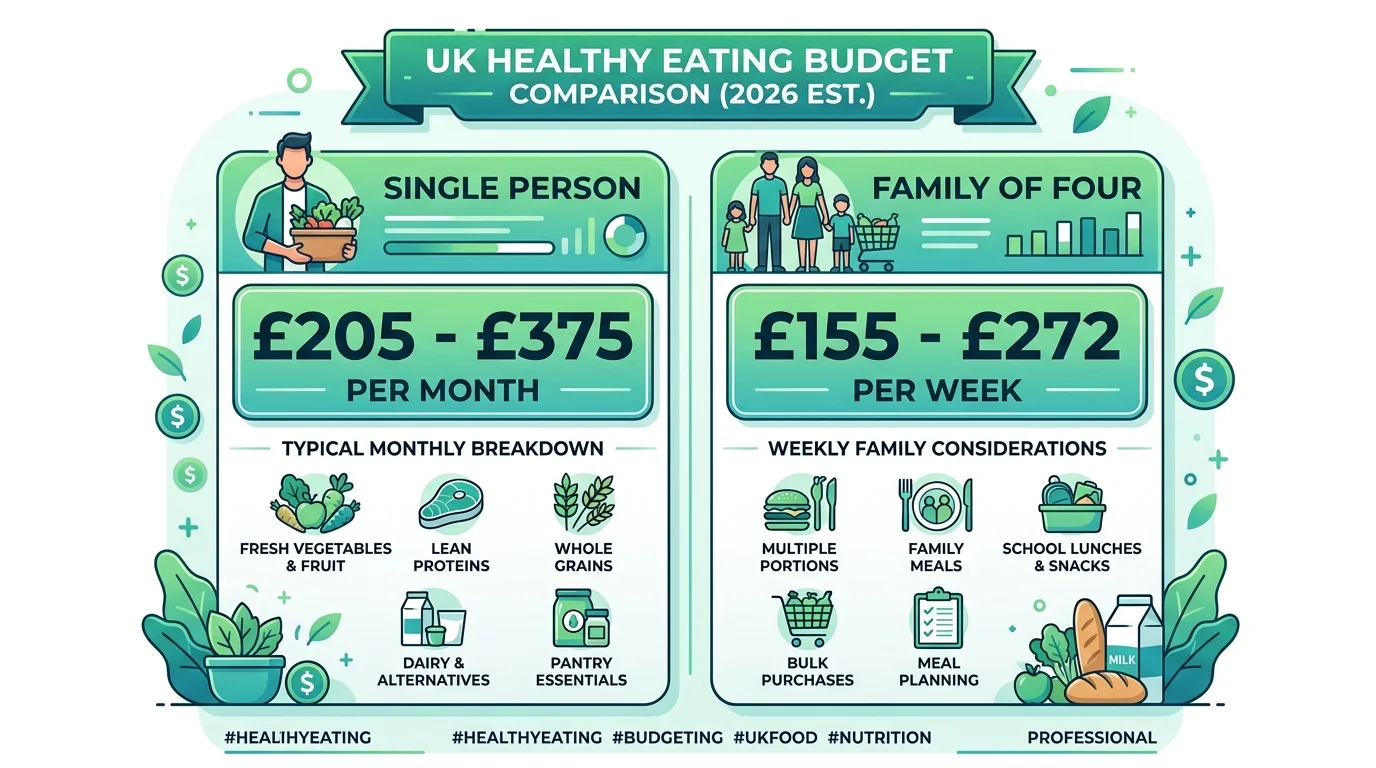
Understanding these costs is the first step toward healthy eating on a budget UK.
| Household | Budget Diet | Standard Diet | Healthy Diet |
|---|---|---|---|
| Single person (monthly) | £205–£240 | £270–£320 | £310–£375 |
| Family of 4 (weekly) | £155–£180 | £203–£235 | £233–£272 |
| Average UK spend per person/week | — | ~£44 | — |
The 10 Cheapest Healthiest Foods in UK Supermarkets 2026
| Food | Cost | Nutritional Value |
|---|---|---|
| Dried red lentils | ~70p per 100g | 25g protein, 15g fibre |
| Eggs (12 free-range) | ~£2.50 | 12 complete protein servings |
| Rolled oats (1kg) | ~£1.00 | 10 bowls — fibre, slow-release energy |
| Frozen vegetables | ~£1–£1.50/bag | Equal nutrients to fresh, zero waste |
| Tinned sardines | ~£1 per tin | 25g protein, omega-3, calcium |
| Whole milk (1 pint) | ~60p | Protein, calcium, vitamins D and B12 |
| Tinned tomatoes | ~45p per tin | Lycopene, vitamin C, fibre |
| Banana | ~12p each | Potassium, B6, fast energy |
| Frozen spinach | ~£1 per bag | Iron, folate, vitamins K and A |
| Kidney beans (tinned) | ~50p per tin | Protein, fibre, iron |
10 Proven Ways to Eat Healthy on a Budget UK 2026
Tip 1 — Plan Your Meals Before You Shop
The single most impactful thing you can do for your food budget and your nutrition This is the foundation of healthy eating on a budget UK.
is to plan your meals for the week before you set foot in a supermarket.
Meal planning works because it eliminates the two biggest budget killers — impulse purchases and food waste. When you know exactly what you are cooking each day, you buy only what you need, use everything you buy, and avoid the expensive fallback of ordering takeaways when you cannot decide what to cook.
A simple weekly meal plan for one person in the UK can cover all seven dinners, five lunches, and seven breakfasts for under £35 — well below the UK average of £44 per person per week.
How to start: Each Sunday, write down seven dinners, five lunches, and your breakfast staples. Build your shopping list from that plan.
Tip 2 — Batch Cook at the Weekend
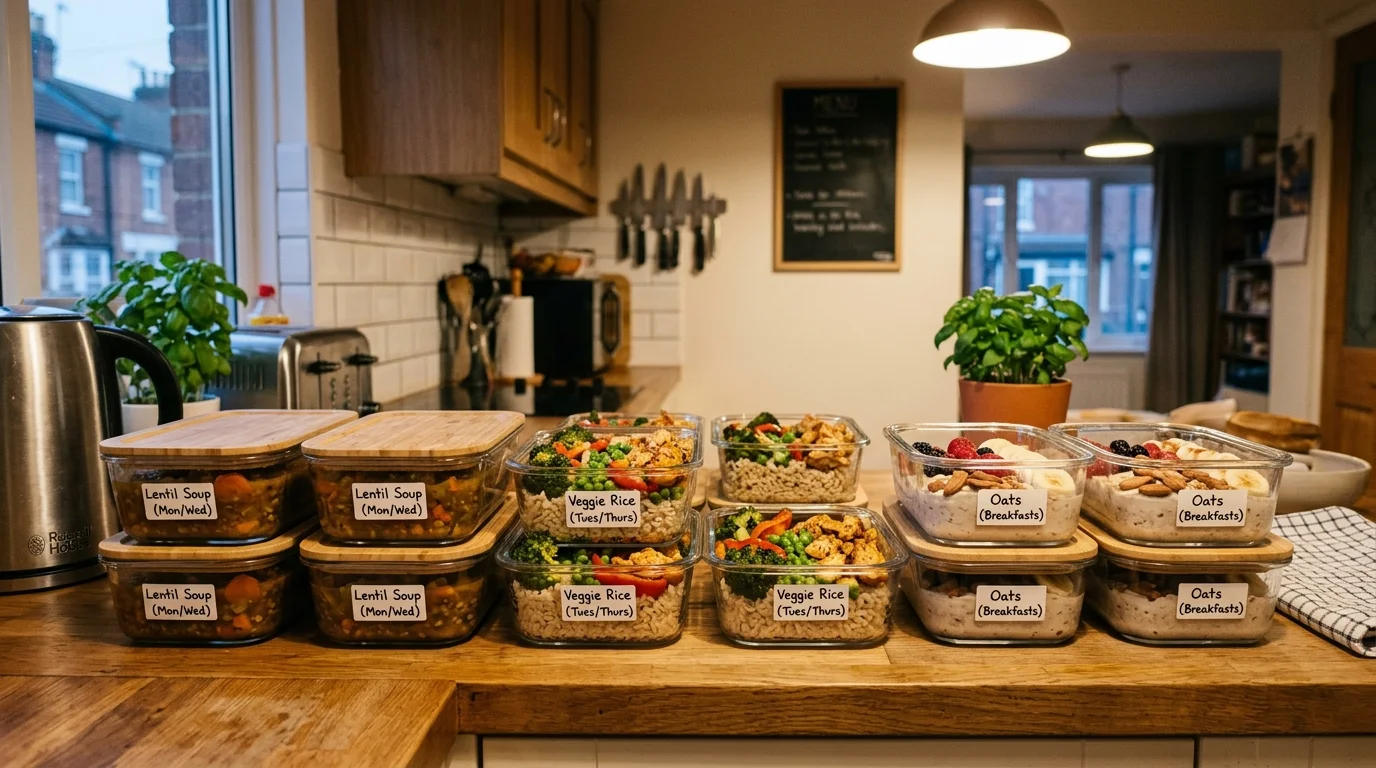
Batch cooking is one of the most powerful budget healthy eating strategies available. On a Saturday or Sunday, spend two to three hours cooking large quantities of nutritious, low-cost meals — lentil dal, vegetable soup, bean stew — and portion them into containers for the week ahead.
Budget example: A large pot of red lentil dal using 500g dried lentils (70p), tinned tomatoes (45p), onions (30p), garlic (20p), and spices (30p) costs under £2 and provides six servings — approximately 33p per meal.
Tip 3 — Switch to Own-Brand Products and Save 40%
Switching to own-brand products is one of the easiest ways to support healthy eating on a budget UK — cutting your food bill without losing nutrition. The nutritional content of own-brand staples — oats, rice, pasta, tinned vegetables, eggs — is virtually identical to branded equivalents at 30–40% lower cost.
Tip 4 — Use Frozen Vegetables Instead of Fresh
Frozen vegetables are nutritionally comparable to fresh — and in many cases superior — because freezing happens within hours of harvest at peak ripeness. A 900g bag of frozen mixed vegetables costs approximately £1–£1.50 with zero waste compared to fresh produce that spoils within days.
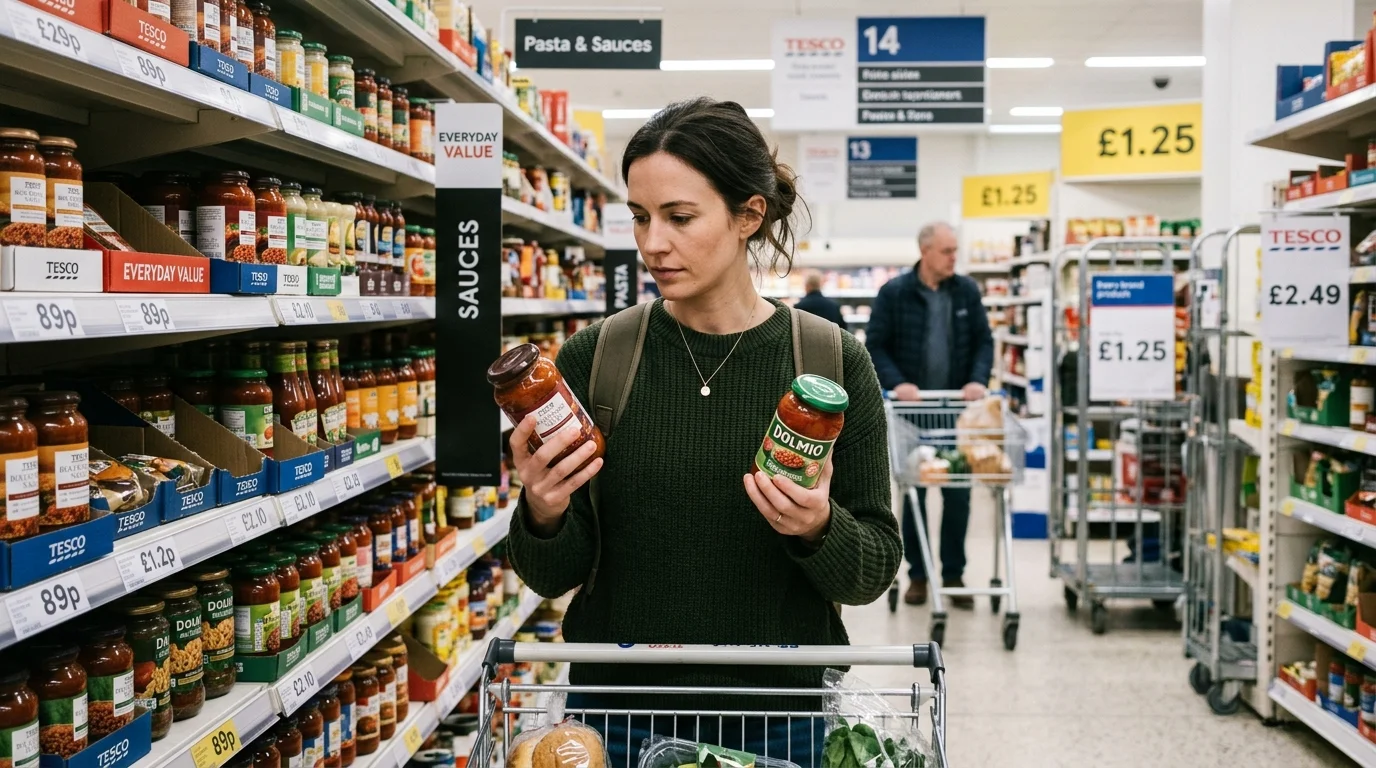
Tip 5 — Buy Reduced Yellow Sticker Items
Every major UK supermarket reduces the price of fresh food approaching its use-by date — typically between 6pm and 9pm on weekdays. These yellow sticker reductions can be 50–75% off the original price.
Focus on lean proteins — chicken, fish, and meat — that can be cooked immediately or frozen for later use to access high-quality protein at a fraction of regular price.
Tip 6 — Cook More Pulses, Beans, and Lentils
A 500g bag of dried red lentils costs approximately 70p and provides around 12 generous servings — each delivering 9g protein, 8g fibre, iron, and B vitamins at approximately 6p per serving.
Easy recipe: Red lentil soup — lentils, tinned tomatoes, onion, garlic, cumin, vegetable stock — costs under £1.50 for four servings and takes 25 minutes.
Tip 7 — Use a Slow Cooker or Air Fryer
A slow cooker uses approximately 0.7–1.0 kWh for an eight-hour cook — costing around 17–25p at current UK electricity rates. An air fryer uses roughly half the energy of a conventional oven. Switching to these appliances can save £100–£150 on your annual energy bill.
Tip 8 — Shop at Aldi and Lidl First
Independent price comparisons consistently show a standard weekly shop at Aldi or Lidl costs 20–35% less than at Tesco, Sainsbury’s, or Asda — with comparable nutritional quality across fresh produce, frozen goods, and staple foods.
Tip 9 — Follow the NHS Eatwell Guide
The NHS Eatwell Guide recommends basing meals around starchy carbohydrates, eating plenty of fruit and vegetables (fresh, frozen, or tinned all count), and including protein from beans, pulses, eggs, fish, and lean meat. Every food group recommended is available cheaply in UK supermarkets.
Free resource: The NHS Eatwell Guide is available free at nhs.uk.
Tip 10 — Reduce Food Waste
The average UK household throws away approximately £730 worth of food every year. Plan meals before shopping, store food correctly, and use your freezer as a budget tool. Before shopping, check your fridge and cupboards and build your next meal around what you already have — this habit alone saves £15–£20 per week.For more ways to manage your money this year, check out our guide on how to save money fast on a low income.
Sample 7-Day Healthy Budget Meal Plan UK 2026 — Under £30
| Day | Breakfast | Lunch | Dinner |
|---|---|---|---|
| Monday | Porridge + banana | Lentil soup | Egg fried rice + frozen veg |
| Tuesday | Eggs on toast | Leftover lentil soup | Chickpea curry + rice |
| Wednesday | Porridge + frozen berries | Bean wrap | Tinned sardines + jacket potato |
| Thursday | Scrambled eggs | Leftover chickpea curry | Lentil dal + flatbread |
| Friday | Porridge | Tuna + rice salad | Homemade vegetable soup |
| Saturday | Eggs + sauteed veg | Leftover soup | Batch-cooked bean stew |
| Sunday | Porridge | Bean stew + bread | Roast chicken thighs + frozen veg |
Estimated weekly cost: £25–£30 per person — well below the UK average of £44.
Frequently Asked Questions
How much should I spend on food per week UK 2026?
For healthy eating on a budget UK, the average UK person spends approximately £44 per week. A budget healthy diet can be achieved for £25–£35 per week by prioritising cheap nutritious staples and reducing waste.
What is the cheapest healthy food in the UK?
Dried lentils (~70p per 100g), eggs (~20p each), rolled oats (~£1 per kg), frozen vegetables (~£1–£1.50 per bag), tinned sardines (~£1 per tin), and tinned tomatoes (~45p per tin).
Can I eat healthy on £20 a week in the UK?
Yes — healthy eating on a budget UK is achievable for as little as £20 per week, use meal planning and cook from scratch with lentils, oats, eggs, frozen vegetables, and tinned fish.
Is Aldi or Lidl cheapest for healthy eating UK?
Both consistently offer the lowest prices for healthy staples — typically 20–35% cheaper than major chains.
Final Verdict
Healthy eating on a budget UK is not only possible — with the right habits, it is entirely achievable for most households. Plan your meals, batch cook, prioritise cheap nutritious staples, buy frozen vegetables, switch to own-brand, and reduce food waste. Apply these consistently and you can eat well for significantly less than the UK average.